


Dungeon Odyssey
4.6100.00 Reviews
App Specs
- Version
- 1.0.9
- Updated On
- License
- Free
- Downloads
- 100,000+
- Developer
- Super Planet
- Categories
- Role Playing
- Platform
- Android
Screenshots


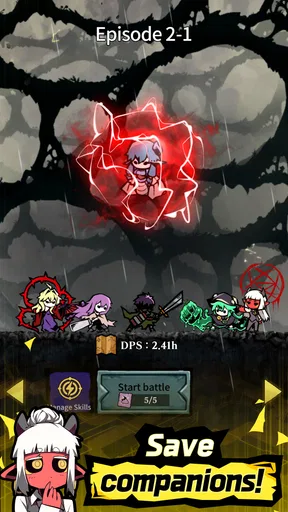
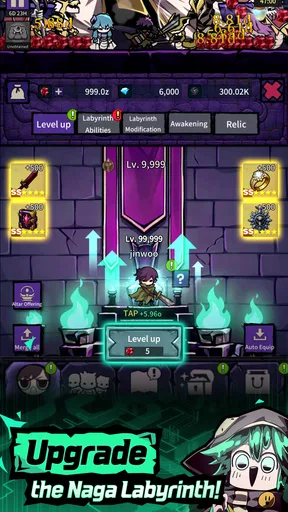

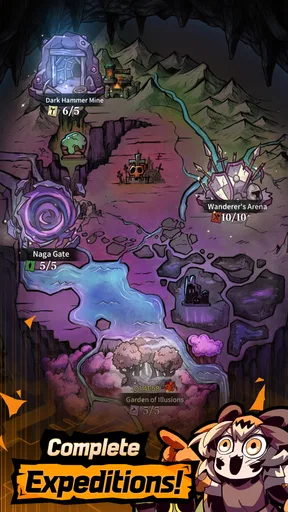

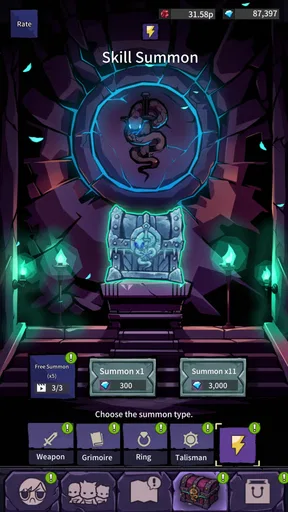
 Analysis by AppCompare
I approached Dungeon Odyssey as a player looking for a role-playing game that could fit into short breaks rather than demand a full evening at once. Developed by Super Planet, it turns a web-comic-inspired world into an idle RPG built around dungeon progress, character growth, and the satisfaction of returning to see what happened while I was away. The premise is easy to understand, but the better question is whether the game gives a new player enough direction to make those first sessions feel meaningful.
My answer is yes, with an important qualification: this is best enjoyed as a gradual progression game, not as a fast, highly interactive dungeon crawler. The free entry point makes it easy to try, and the Everyone age rating keeps its audience broad. At the same time, the presence of optional in-app purchases means I would approach the progression with a clear personal limit rather than treating every offer as part of the basic experience.
What the first session feels like
The central appeal is the contrast between a comic-style adventure and an idle structure. Instead of expecting me to control every movement or fight in real time, the game is designed around letting an expedition develop, checking results, and deciding how to improve the next attempt. That makes it a natural choice for someone who enjoys role-playing systems but does not always have the time or concentration for a long manual battle.
The store summary presents the game as an adaptation of web comics that have attracted more than twenty million views, but I found the more useful way to understand it is this: it wants to combine a recognizable fantasy journey with the routine of building a stronger dungeon-running character. The labyrinth is not merely a backdrop. It gives the progression a clear destination, so upgrades feel connected to a practical goal rather than being numbers that rise without context.
There is a particular rhythm to this kind of game. I might open it while waiting for a coffee, inspect the latest result, spend resources on a sensible improvement, and begin another push before putting the phone away. Later, I can return and see whether that small decision helped. This is more convenient than a conventional role-playing game that pauses completely when I leave, but it also means the excitement is spread across repeated check-ins.
That distinction matters for expectations. If you want precise dodging, elaborate manual combos, or a story that moves forward only through long playable scenes, this probably will not replace a traditional action RPG. If you like watching a build become more capable over time and making occasional choices about where to invest, the idle format is much more comfortable.
The game has already attracted over one hundred thousand installs and holds a 4.6 average from around four thousand ratings. Those figures suggest that its basic loop is connecting with a sizeable audience, although they do not remove the need to decide whether idle progression suits your own habits. I would not install it because it is popular alone; I would install it because its short-session structure matches the way I use mobile games.
Worth Reading Before You Choose

EA SPORTS FC Mobile 26 Is a Bigger Football Game, but It Takes Time

Flipboard Shows What News Apps Must Do Beyond the Feed

Switching to Android Auto Means Rethinking Your Driving Routine

Google Calendar Makes a Crowded Week Easier to Manage

Ludo King Makes the Most of the Minutes Between Plans

Baby Panda World Brings Quick Play to Modern Phones, but Its Game Library Feels Busy
Who will get the most from it
I see three especially good audiences here. The first is someone who likes role-playing progression but has irregular free time. The second is a player who enjoys checking equipment, resources, and upgrades more than mastering real-time controls. The third is a fan of comic-flavored fantasy settings who wants a game that can be sampled in small pieces.
It is also a reasonable companion game. I can keep it available for brief visits while a larger console or mobile RPG remains my main experience. The two styles serve different moods: one asks for attention, while this one is more forgiving when I only have a minute.
I would be more cautious if you dislike waiting for progress, repeating stages, or comparing several possible improvements before committing resources. Idle RPGs can make a small decision feel important, but they can also feel slow when a character reaches a wall. Players who need constant direct control may find the hands-off structure less satisfying than a dungeon game with active combat.
Starting without wasting the early progress
The first useful habit is to treat the opening session as an orientation period rather than a race. I would let the initial sequence explain the basic loop, then watch what the game asks me to do before spending everything immediately. New players often make the mistake of using every reward as soon as it appears. In a progression game, keeping a little flexibility is usually more valuable than making the first available purchase or upgrade.
My practical approach would be simple. First, identify what actually increases the character’s ability to continue through the labyrinth. Then separate that from rewards that merely look attractive because they are new. If the interface presents several upgrade paths, I would favor the one that helps overcome the current obstacle instead of distributing resources evenly just to make every number move.
This is one of the less obvious advantages of an idle format: the results screen becomes a planning tool. I do not need to guess entirely from menus. I can compare the last successful attempt with the first failed attempt and ask what changed. Did the character survive but deal too little damage? Did progress stop because the next encounter lasted too long? The answer should guide the next improvement more than a general desire to make the character “stronger.”
For a first-time user, I would also recommend checking the game at a repeatable moment in the day. A short visit after breakfast or during a commute is easier to maintain than opening it randomly and forgetting what was happening. This turns the idle loop into a routine instead of a noisy stream of notifications and unfinished decisions.
The current version is 1.0.9, and the minimum operating system is Android 7.1. That makes the game accessible to a wide range of Android devices, including phones that are not recent flagship models. Still, compatibility is not the same as identical comfort. On a smaller display, menus and reward screens may require more careful reading, so I would avoid rushing through unfamiliar panels during the first few minutes.
The first meaningful success
For me, the first real success in Dungeon Odyssey is not simply clearing an early encounter. It is understanding why the clear happened and being able to repeat that progress with a deliberate adjustment. Once I can connect a resource choice to a better result in the labyrinth, the game stops feeling like a sequence of automatic rewards and starts feeling like a role-playing system I am managing.
A realistic scenario would be opening the game after a work break and finding that the character has stopped at a difficult section. Rather than immediately searching for the most expensive solution, I would review the recent outcome, collect what has accumulated, and make one focused improvement. I would then begin another attempt and leave the game again. When I return later, I can judge whether that single change made a difference. This workflow is less wasteful than changing several things at once, because it gives me a clearer sense of cause and effect.
That single-change method is a useful tip for any player who feels overwhelmed by upgrade screens. If I improve everything simultaneously, I may progress but learn nothing. If I change one meaningful factor, the next result teaches me something. The process is slower in theory, but it makes later decisions easier because I understand my own build rather than copying an unexplained pattern.
Another helpful habit is to distinguish a temporary wall from a permanent problem. A failed push does not automatically mean the character needs a complete rebuild. Sometimes the better choice is simply to allow another cycle of resources to accumulate and then test the same route again. This is where the idle design asks for patience. Spending impulsively can shorten the wait, but it can also leave me with fewer options when a more important obstacle appears.
Where new players may feel confused
The largest source of confusion is likely to be the relationship between automatic progress and player agency. Because the game can continue its role-playing loop without constant input, it may initially seem as though my decisions do not matter. In practice, the important choices are often made between attempts: what to improve, when to push forward, and whether a reward is better saved for a larger obstacle.
I would not judge the game fairly after only watching the opening rewards. The early section of an idle RPG is designed to establish momentum, while the more interesting question is how I respond when that momentum slows. If I expect every session to deliver a dramatic new ability or a major story turn, the routine may feel repetitive. If I view each return as a small management decision, the same structure becomes more engaging.
Purchases deserve similar attention. The game is free to download, but optional items range from $0.99 to $89.99 each. I would treat the lower and higher offers very differently: the existence of a large top-end purchase means I would decide my spending boundary before browsing the shop. A free-to-start game can remain enjoyable without turning every improvement into a transaction, but that depends on resisting the pressure to solve every slowdown immediately.
My advice is to play through the first meaningful progression cycle before buying anything. That gives enough context to decide whether the loop itself is enjoyable. If I already like checking the labyrinth and planning upgrades, a purchase may feel like a convenience. If I am bored before reaching that point, spending money will not fix the underlying mismatch between my preferences and the game’s pace.
The age rating is Everyone, which makes the game easier to consider for a broad household audience. Even so, I would still explain the purchase model to younger players and use the device’s normal purchase controls. An accessible content rating does not mean every spending decision should be left unattended.
How it compares with familiar role-playing games
Compared with a traditional turn-based RPG, Dungeon Odyssey asks for less moment-to-moment input and gives more importance to return visits. That is its clearest strength and its clearest limitation. I can make progress when I do not have time for a full battle, but I lose some of the satisfaction that comes from selecting every action myself.
Compared with an action dungeon game, it is calmer and more forgiving of interruptions. I can put the phone down without abandoning a carefully timed sequence. The trade-off is that the labyrinth is experienced through progression decisions rather than reflexes. Players who enjoy the physical feeling of controlling a character through danger should choose an active alternative instead.
Compared with a purely casual idle game, the role-playing framing gives the routine more purpose. The dungeon provides a reason to care about improvement, while the web-comic connection gives the setting a distinct identity. I still would not describe it as a replacement for reading the original comics or playing a story-heavy RPG. It is a compact interpretation built for repeated mobile sessions.
The best comparison is therefore not “better” or “worse,” but “more suitable for this moment.” On a crowded day, the automatic structure is useful. On a quiet evening when I want to make every combat decision, it may feel too passive. Knowing that before installing it will prevent most disappointment.
Small decisions that improve the experience
I found that the most effective way to keep the game interesting is to give each visit a purpose. One visit can be for collecting and checking progress. Another can be for choosing an upgrade. A later visit can be for testing whether the change solved the obstacle. Without that structure, it is easy to tap through rewards mechanically and wonder why the game feels empty.
I would also avoid opening the shop before checking the ordinary progression options. This is not because every offer is necessarily poor value, but because shop prompts can change the way I evaluate a problem. A difficult stage should first be treated as a gameplay question: do I need more power, better timing in my decisions, or simply more accumulated resources? Only after answering that should I consider whether spending is worthwhile.
A third useful technique is to keep notes mentally about the last stopping point. If I return after several hours and immediately change multiple upgrades, I lose the context of the previous attempt. Remembering “the character reached the obstacle but could not finish it” is enough to make a more informed next move than simply selecting the brightest new button.
These habits are not complicated, but they matter because idle games can hide their strategy beneath a very easy interface. The taps are simple; the resource priorities are where the long-term experience is decided. That is also why I would recommend it more strongly to patient players than to people looking for instant variety.
My recommendation after settling into the loop
After giving the game a fair first-time path—from installation to an intentional upgrade and another labyrinth attempt—I see Dungeon Odyssey as a pleasant choice for players who want lightweight role-playing progression with a comic-inspired identity. Super Planet has positioned it for mobile sessions that can be short, interrupted, and repeated throughout the day. The free price makes experimentation straightforward, while the broad age rating keeps the presentation approachable.
My recommendation comes with boundaries. I would choose it over a conventional RPG when I want progress without constant control, and over a purely passive idle title when I want the dungeon setting to give my upgrades a clear purpose. I would skip it if my main requirement is fast action, deep manual combat, or a story that carries every session.
The most important thing for a new player is not to chase every reward or purchase as soon as it appears. Let the early loop teach you what causes progress, make one focused improvement at a time, and use the labyrinth’s stopping points as feedback. That approach makes the game feel more thoughtful and reduces the frustration of spending resources without understanding the result.
With an average of 4.6 from roughly four thousand ratings and over one hundred thousand installs, it has clearly found an audience, but its real appeal is more personal than those figures suggest. I would recommend trying it during a normal day rather than during a long dedicated gaming session. If you enjoy returning to see how far an expedition went, making a small adjustment, and watching that decision pay off later, Dungeon Odyssey is an easy game to keep in rotation.
For me, the final test is simple: after the first successful push, did I want to know what the next obstacle would require? If the answer is yes, the idle structure is doing its job. If the answer is no, a more active role-playing game will probably be the better use of your time. That honesty is important here, because the game’s strengths become clear only when its slower, repeat-visit rhythm matches the player.
As a free role-playing game, it offers a low-risk way to explore that rhythm. I would install it with modest expectations, set a spending boundary, and give the progression enough time to show its shape. For the right player, that is enough to turn a few spare minutes into a satisfying long-term dungeon routine.
Pros
- Fast-paced dungeon runs fit well into short gaming sessions.
- Randomized stages make repeated runs feel less predictable.
- Character upgrades provide a satisfying sense of long-term progress.
- Offline play makes it convenient for gaming without an internet connection.
- Simple controls are easy to learn on a touchscreen.
Cons
- Later stages can become noticeably grind-heavy without repeated farming.
- The small interface may feel cramped on phones with smaller screens.
- Build variety may feel limited compared with deeper roguelike RPGs.
- Difficulty spikes can make some encounters feel unfair without upgrades.
- Visual effects and repeated battles may drain battery during longer sessions.
FAQs for Dungeon Odyssey
What is Dungeon Odyssey?
Dungeon Odyssey is a mobile dungeon-crawling RPG focused on exploration, combat, character growth, and collecting rewards. Players guide a hero through dangerous underground areas, fight different enemies, discover equipment, and improve their abilities over time. The game is designed for short or extended play sessions, making it suitable for users who enjoy action-oriented progression and fantasy adventures on mobile devices.
How does combat work in Dungeon Odyssey?
Combat in Dungeon Odyssey combines strategic movement, attacks, abilities, and equipment management. Success depends on learning enemy patterns, choosing suitable skills, and improving your character before entering more difficult areas. Although the basic controls are accessible, later encounters can require careful timing and planning. Players who prefer fast action with RPG progression should find the combat system relatively easy to understand but increasingly challenging.
Can Dungeon Odyssey be played offline?
Offline availability may depend on the specific version, platform, and features being used. Some parts of the game may work without a constant internet connection, while advertisements, cloud services, updates, purchases, or account-related functions can require access to the internet. Before downloading, players should check the store listing and test the game with a temporary offline connection if playing without mobile data is important.
Is Dungeon Odyssey free to download and play?
Dungeon Odyssey may be available as a free download, but players should review the store page for the current pricing model in their region. Free versions can include advertisements, optional purchases, or progression-related systems that are not required for basic play. Checking the in-app purchase section before installing is recommended, especially for parents or users who want to avoid unexpected spending.
What devices are compatible with Dungeon Odyssey?
Compatibility depends on the operating system, device model, and version of Android or iOS installed. Newer phones and tablets generally provide a smoother experience, particularly during busy combat scenes or visually detailed dungeon sections. Before downloading, check the official app-store listing for the required operating-system version, available storage, and any stated hardware requirements to make sure your device can run the game properly.


